French Seam or Overlocked Edge for a Lightweight Blouse?
Choose a French seam or overlocked edge for a lightweight blouse by comparing show-through, seam bulk, fabric stability, and how cleanly each finish contains the edge.
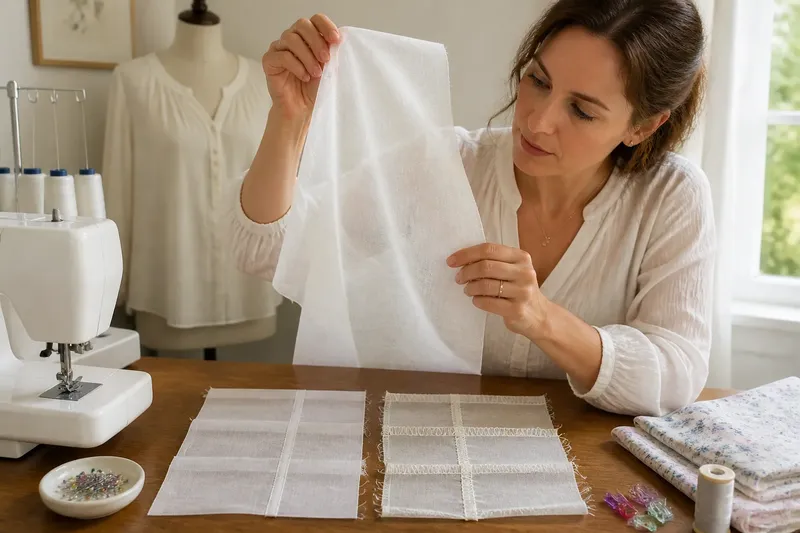
The most common mistake with a French seam or overlocked edge for a lightweight blouse is choosing by appearance alone. A finish can look tidy on the inside yet create a visible ridge, a crowded junction, or a wavy seam once sewn into the garment. Imagine a maker starting with a sheer, loosely woven fabric: a sample may look neat on the table but feel too bulky along the blouse’s side seam.
A French seam encloses the raw edges within a narrow fold. An overlocked edge wraps the cut edge in looped thread, usually with a serger. Neither is automatically better; the cloth’s transparency, fraying, stability, and the seam’s location all matter.
What does the fabric reveal before sewing?
Hold a scrap up to a window or lamp, drape it over your hand, and inspect its cut edge. Notice whether the fabric is transparent, frays readily, stretches, or slips under light handling. Those clues help predict what may happen where the seam meets the body or another seam.
A French seam makes two lines of stitching and an enclosed fold. On transparent voile or fine lawn, the folded strip can show as a faint ridge or shadow. An overlocked edge avoids that fabric fold, but its thread loops may still show through sheer cloth, especially if the thread contrasts with the fabric.
Fraying also affects the choice. A French seam encloses the cut edge; an overlocked finish covers it with thread. If the fabric distorts easily, either method can ripple when handled or stitched. Lightweight does not always mean fragile: a fine, stable fabric may accept either finish, while a slightly heavier, loose weave may shed threads readily.
How do the finishes look and feel?
A French seam has no exposed raw edge along the finished seam. Its narrow fold adds fabric layers, which can make a defined line on the outside and a tidy interior. That clean inside can suit a blouse worn open or without another layer underneath.
An overlocked finish is easy to recognize inside the garment. Depending on the thread, machine settings, fabric, and seam placement, it may lie flat or form a soft ridge. On a sheer blouse, dense loops or bright thread can become visible design details whether intended or not.
Bulk depends on more than the fabric layers. A French seam adds a folded strip; overlocking adds thread around the edge. At an underarm junction, where seams meet, either finish can form a firmer spot than it does along a straight side seam. Check the junction as well as the unbroken seam line.
Consider movement, too. A seam that lies flat on the table may tug or stand away when the blouse is worn. A flowing side seam may call for a supple finish, while a seam that receives frequent handling may need a durable edge treatment. Let the cloth’s behavior guide the construction rather than forcing it into a finish it resists.
Which finish suits this blouse?
Say a maker has transparent, stable fabric that frays only mildly and plans a relaxed blouse with visible side seams. The maker uses scraps from the actual fabric, sews one sample of each finish with thread close to the fabric color, and views them over both a dark background and a hand.
The French seam sample creates a delicate, defined line; its fold shows as a faint shadow, while the inside looks clean. The overlocked sample has less fabric folded into the seam, but its loops look busier through the cloth. The maker chooses the French seam because the slight shadow suits the blouse and the fabric holds its shape during stitching. The expected result is a neat interior and a visible but restrained seam line, not an invisible one.
Now suppose the fabric is loosely woven and sheds threads, while a French seam would make a particular junction feel crowded. The maker could use an overlocked finish there, then check whether its loops show through the cloth. A different finish may suit another seam location; a consistent method is useful, but not if it creates an awkward, bulky join.
What should you check in a seam sample?
Use scraps from the actual fabric and make samples with the thread and machine setup planned for the blouse. For each observation, make the corresponding decision before assembling the garment:
- Show-through: Hold each sample over light and dark backgrounds. If one finish creates a distracting line, choose the quieter finish; if both show clearly, decide whether that visible detail suits the blouse or reconsider the seam placement.
- Edge behavior: Gently handle a cut scrap and inspect for loose threads. If the edge sheds readily, choose the finish that contains it cleanly; if neither sample does so without stiffness, try another suitable edge treatment.
- Drape: Let each sample hang freely. If a seam pulls the fabric into a ridge or makes it hang unevenly, reject that finish for the location; if both hang smoothly, compare their appearance and handling.
- Bulk at joins: Cross two sample seams as they will meet in the blouse. If a junction looks crowded or feels firm, use a construction with less buildup there; if it lies comfortably, keep that finish as an option.
- Thread visibility: Compare thread shades against the cloth in ordinary indoor light. If the overlock loops stand out, try a closer thread shade or choose the French seam; if the loops remain visible but suit the design, keep the overlocked finish in consideration.
- Handling stability: Stitch and turn a short sample, then check for stretching, rippling, or slipping. If the edge distorts, adjust handling or machine settings and sample again; if it stays aligned, that finish is a workable candidate.
Fabric scraps, matching thread, pins or clips, a sewing machine, and—if available—a serger are enough for this comparison. Without a serger, assess a French seam and consider another edge finish suited to the garment. Make the decision before assembling the blouse, when changing the plan is simpler.
What do sewists ask about French seams and overlocked edges?
Is a French seam always best for sheer fabric?
No. It encloses the raw edge, but its folded layers can show through very sheer cloth. Sample the seam to see whether the line looks refined or too prominent for the blouse.
Does an overlocked edge always add less bulk?
No. It avoids the fabric fold of a French seam, but thread loops can make the edge feel firm or look raised. The result depends on the cloth and the overlock settings.
Can one blouse use both finishes?
Yes, if each finish suits its seam location and works with the garment’s construction. A maker might use a French seam along a long side seam and overlocking where an enclosed fold would crowd a junction.
What if the fabric stretches or slips while sewing?
Test a sample using the same handling planned for the blouse, then check for rippling or distortion. Follow the fabric and machine manufacturer’s guidance when choosing settings for that material.
How can you settle the choice?
In the imagined blouse, the maker compares the actual swatches rather than relying on habit or a sample made from different fabric. The cloth accepts a narrow fold, the thread line stays quiet, and the French seam’s slight shadow suits the design. If the sample had rippled or made a junction too bulky, the maker would have chosen another finish for that location.
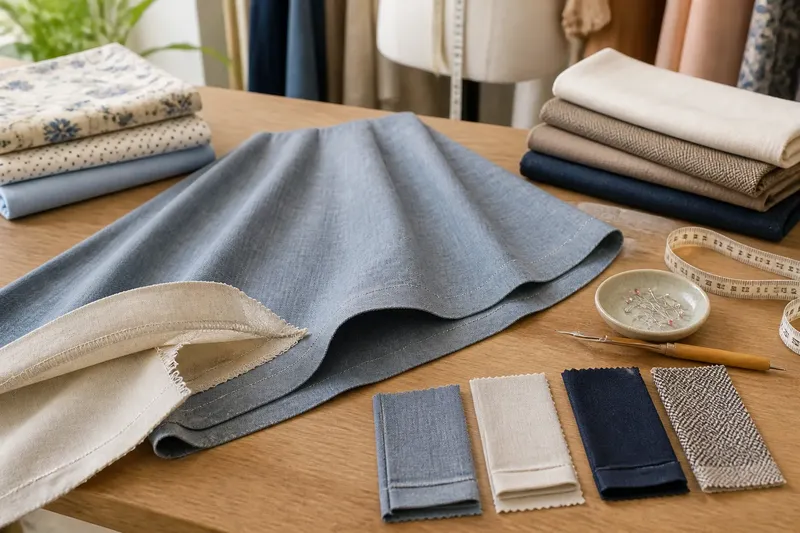
A French seam encloses fabric within fabric and gives a clean interior, at the cost of a folded ridge. Overlocking wraps the edge in thread and avoids that fold, while adding its own texture and visible loops. A sample at a seam intersection can reveal a problem that a straight seam does not.
For a French seam or overlocked edge for a lightweight blouse, keep the chosen sample beside the sewing machine as you assemble the garment. It serves as a clear reference for the seam’s width, thread appearance, and behavior at joins, helping each finished seam match the choice that worked for the cloth.