Why Bias-Cut Fabric Moves Differently
Bias-cut fabric can shift and drape differently from straight-grain cloth. Learn how grain direction affects pattern layout, handling, fit, and finishing.
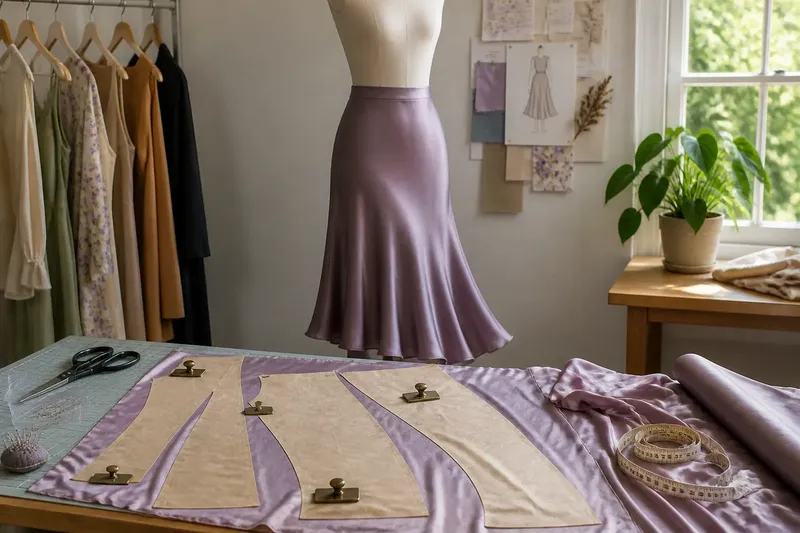
The common mistake with bias-cut fabric is treating it like ordinary cloth turned at an angle; the cost can be a garment that twists, ripples, or hangs unevenly. Bias-cut fabric moves differently because its threads meet the body diagonally, giving the cloth room to shift and drape.
What does bias mean in fabric?
Bias is a diagonal direction across woven cloth. True bias runs at roughly forty-five degrees to the lengthwise and crosswise threads. The lengthwise grain runs parallel to the selvage, the finished edge of the fabric; the crosswise grain runs from selvage to selvage.
In woven fabric, lengthwise and crosswise yarns interlace. Along either grain, their arrangement limits movement. On the bias, the yarns can shift against one another more readily. The cloth gains give as its yarn grid changes shape, though its fibers have not become inherently elastic.
Bias is not the same as stretch fabric. Knit jersey stretches because of its looped structure, while woven fabric cut on the bias gains flexibility from the way its yarns can angle and settle. A woven satin cut on the bias may drape fluidly, but it will not behave exactly like knit satin.
Why does bias-cut fabric stretch and drape?
Pull woven fabric along a diagonal and its yarns can tilt, changing the shape of the spaces between them. The cloth can lengthen in that direction as the yarn grid shifts. When the pull eases, it may recover somewhat, or it may settle into a changed shape, particularly under its own weight.
That movement can help a bias-cut skirt fall in soft folds or a slip dress follow curves without relying on darts for every change in shape. It can also make a narrow strap or neckline ripple if the edge is stretched during handling.
Fabric type affects the result. Fluid rayon challis may swing and drape more readily than crisp cotton poplin. A tightly woven wool may hold a more controlled line, while slippery silk charmeuse can shift under shears or a sewing machine. Bias describes the direction of the cut, not a single predictable look.
How does bias differ from straight grain?
Straight-grain pieces tend to be more stable in length and width, so they suit garments that need a firm outline or consistent fit. Bias pieces have more diagonal give and can conform to the body, but their edges and hanging lengths can be less predictable. Neither direction is automatically better; the design determines which behavior is useful.
- Lengthwise grain: If a long panel needs a steady outline, check that its grainline runs parallel to the selvage; if the pattern specifies bias instead, follow that marking or reconsider the design.
- Crosswise grain: If the pattern places a piece across the fabric, check its grainline against the selvage; if the fabric shifts more in that direction, support the piece while handling it or use the pattern’s alternate layout.
- True bias: If the design needs diagonal give, check that the marked grainline follows the fabric’s diagonal; if the cloth proves too mobile for the intended shape, choose a more stable fabric or a supported construction.
- Mixed grainlines: If neighboring pieces use different directions, check how their seams meet; if one edge is more mobile, follow the pattern’s seam support or construction order rather than forcing the edges together.
- Motifs and nap: If a print, pile, or one-way design must face a particular direction, check the full layout before cutting; if the pieces do not fit, choose a different layout or more suitable fabric rather than rotating pieces casually.
- Fabric width: If the pattern’s diagonal layout reaches beyond the available cloth, check the marked layout against the usable width; if it will not fit, find additional suitable fabric or select another pattern layout.
A pattern may combine directions: a bodice can be cut on grain for structure while a skirt panel uses bias for movement. That choice affects how the garment hangs at the seam between them, so treat the pattern’s grainline markings as construction information, not a casual suggestion.
What should you plan before cutting bias fabric?
Plan around the fabric’s movement, not just the silhouette drawn on the pattern. Bias garments can cling, skim, or swing depending on the weave, weight, and cut. A design that looks loose on a flat pattern may settle closer to the body, while a curved hem may dip where the cloth shifts more.
Check the pattern’s grainline and fabric recommendations before laying out the pieces. Bias layouts often leave angled spaces between pattern pieces, so the arrangement may require more cloth than a comparable straight-grain layout. Motifs, nap, and one-way designs can add constraints. Confirm that the usable fabric width and available yardage accommodate the specified arrangement before cutting.
Pay attention to balance. Center front, center back, and side seams need to hang as the design intends. If a prominent seam sits on the bias beside a straight-grain panel, it may move differently. A narrow facing, stable lining, or stay tape may be part of the intended construction rather than an optional finish.
Say you have an invented project: a bias-cut rayon skirt pattern calls for a straight-grain waistband. Your starting materials are the pattern, rayon, and waistband fabric. You lay out the rayon according to the marked grainlines, sew the panels to the waistband as directed, then let the skirt hang before marking its hem. The observable result is that the hemline reflects the skirt’s settled drape; the tradeoff is waiting to finish the hem until the fabric has had time to shift.
How can you handle and sew bias pieces?
Let fabric rest flat before cutting if it has been folded tightly or transported. Use a large, clear cutting surface and smooth the cloth without tugging it into place. Pattern weights can help restrain slippery fabric; sharp shears or a rotary cutter and mat can make clean cuts if the fabric stays flat.
Transfer pattern marks gently and support pieces as you move them. A long bias edge can distort if it dangles from a table or is lifted by one corner. When sewing, match seam points without pulling one layer to fit the other. A walking foot may help feed slippery layers evenly; careful pinning or clips can also work with a more stable fabric.
Staystitching—a line sewn just inside a vulnerable edge—can limit distortion where the pattern calls for it. Follow the pattern’s sewing direction, since the order can affect how an edge is eased. Avoid stretching a neckline or armhole while pressing. Use a press cloth and lift and place the iron rather than sliding it across the diagonal.
Follow the pattern, fabric label, and equipment instructions for pressing and care. Fiber content and finishes affect suitable settings. If the design includes a lining or stabilizer, consider how it moves: a lining much less mobile than the outer fabric may pull or restrict the bias layer unless the construction accounts for the difference.
What do sewists ask about bias-cut fabric?
Does bias-cut fabric always stretch?
It often has more give diagonally than along the straight grain, but the amount depends on the weave, fiber, finish, and fabric weight. Some cloth feels springy on the bias; some shifts only slightly.
Does a bias-cut garment need a larger size?
Not automatically. The pattern’s intended ease and the fabric’s drape matter more than a blanket size adjustment, so compare the pattern measurements and its stated fabric behavior before changing the fit.
Why can a bias-cut hem look uneven?
Different sections may lengthen by different amounts as the garment hangs, particularly around curves. Let the garment settle as the pattern directs before leveling the hem, so you can account for the way the cloth falls.
Can any woven fabric be cut on the bias?
Many woven fabrics can be cut that way, but a particular cloth may become bulky, unstable, or difficult to handle in a given design. Consider its weight, slipperiness, motif direction, and the pattern’s recommendations before choosing a bias layout.
When is bias a useful design choice?
Bias can be useful when a garment needs softness, movement, or the ability to follow a curve without a rigid seam shaping every contour. It suits some skirts, dresses, scarves, and garment details. It is less helpful when the design depends on a crisp edge or highly controlled shape, unless the construction adds support where needed.
Think of bias as a behavior to plan for, not a shortcut to effortless fit. Its diagonal give can turn a flat woven surface into cloth that flows around the body, but it also calls for deliberate cutting, gentle handling, and time for the fabric to settle. When planning bias-cut fabric, check the grainline, support mobile edges, and make finishing decisions only after the garment hangs as intended.